North York Moors & Coastal
You will find some of the most iconic scenery in Yorkshire: sweeping moorland trails, steam‑train journeys through wooded valleys, cliff‑top walks above the North Sea, and villages that feel untouched by time.
Think wild walks, cosy tearooms, big skies, and that unmistakable feeling of stepping into proper Yorkshire countryside.
From the dramatic coastline at Whitby and Robin Hood’s Bay to the quiet beauty of Farndale, Rosedale and Bransdale, every corner of the Moors has its own story.
Photographers love the endless views, families love the easy paths and wildlife, and walkers come back year after year for that rare mix of peace, colour and open space.
Whether you’re here for hiking, heritage, coastal adventures or simply a breath of fresh air, the North York Moors are where Yorkshire’s wild side truly shines.
Set your pace, follow the curves of the land, and discover the places only locals tend to know.
⭐ North York Moors National Park
Wild horizons, ancient stories, and villages shaped by the land itself.
Wild, windswept and steeped in legend, the North York Moors National Park is one of the most evocative landscapes in Britain. This vast upland plateau covers 554 square miles of heather‑clad hills, deep dales and a dramatic coastline that looks like it has stepped straight out of a gothic novel.
🏘️ The Heart of the Moors: Villages with Character
The villages of the Moors aren’t just places to live — they’re shaped by the landscape itself. Built from warm, honey‑coloured sandstone, they feel timeless, resilient and deeply rooted in their surroundings.
Hutton‑le‑Hole
Often described as the most picturesque village in the National Park. A wide green, free‑roaming sheep, a gentle beck running through the centre, and the excellent Ryedale Folk Museum make it a perfect slow‑travel stop.
Goathland
Famous as Aidensfield in Heartbeat and Hogsmeade Station in the Harry Potter films. Expect roaming livestock, a nostalgic steam railway station and classic moorland scenery.
Thornton‑le‑Dale
Home to Beck Isle Cottage, one of the most photographed houses in Yorkshire. A chocolate‑box village with a stream, tearooms and woodland walks.
Robin Hood’s Bay
On the eastern edge of the Moors, this old fishing village clings to the cliffs. Its steep, winding alleys once hid smugglers and contraband — today they hide cafés, galleries and sea views around every corner.
🛏️ Where to Stay in the North York Moors
Find places to stay across the North York Moors (links coming soon).
⭐ Attractions & History: From Romans to Iron
The Moors are a living landscape, shaped by more than 4,000 years of human activity — from ancient tribes to Victorian industry.
Rievaulx Abbey
The soaring ruins of this Cistercian monastery sit in a quiet valley near Helmsley. Once one of England’s wealthiest abbeys, it was dissolved under Henry VIII. Today it’s one of the most atmospheric historic sites in Yorkshire.
North Yorkshire Moors Railway
One of the world’s most popular heritage lines. Board a steam train at Pickering and travel through forests, moorland and valleys all the way to Whitby.
The Land of Iron (Rosedale & beyond)
In the 19th century, parts of the Moors were industrial powerhouses. Huge kilns, ironstone mines and railway remnants still cling to the hillsides — haunting reminders of a once‑booming industry.
Cawthorn Roman Camps
Rare Roman earthworks offering a glimpse into how the Empire tried to control this wild northern frontier.
⭐ Walks & Nature: Purple Heather & “Yorkshire’s Matterhorn”
Visit in late August or early September and the Moors transform into a sea of purple heather — one of the most spectacular natural displays in Britain.
Roseberry Topping
Nicknamed Yorkshire’s Matterhorn, this distinctive half‑cone hill offers panoramic views across the Cleveland Plain. A short but rewarding climb.
The Hole of Horcum
A vast natural amphitheatre, 400 feet deep and half a mile wide. Legend says a giant scooped out the earth during an argument — geologists have a different explanation, but the drama remains.
The Cleveland Way
A 109‑mile National Trail that skirts the edge of the Moors before following the dramatic coastline. You don’t need to walk it all — short sections offer some of the best views in Yorkshire.
Falling Foss
A hidden 30‑foot waterfall tucked inside ancient woodland, complete with a charming tea garden nearby.
⭐ How the Moors Were Made
Geologically, the North York Moors are a dissected plateau. Millions of years ago, this was a tropical sea — which is why you’ll find Jurassic fossils along the cliffs at Whitby and Staithes.
Later, glaciers carved out the deep dales (like Farndale, famous for its spring daffodils) and left behind the high, acidic moorland where hardy sheep and red grouse thrive.
Pro Tip
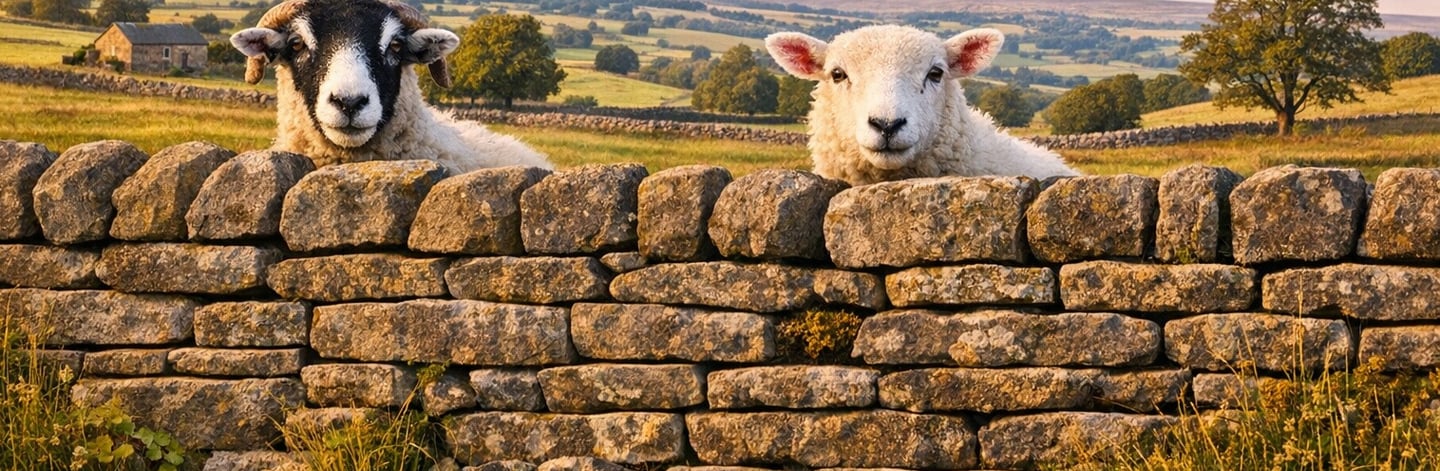
Watch out for the Moors sheep. They have right of way, no road sense and a very stubborn attitude.
⭐ Planning Your Visit
The best way to experience the Moors is to choose a base — Helmsley, Pickering, Goathland or Hutton‑le‑Hole — and explore the valleys and ridges from there.
The weather can change in a heartbeat on the high moors, so always bring a waterproof jacket and sturdy footwear.
The North York Moors offer a diverse range of accommodations, from traditional inns steeped in history to scenic spots for those who prefer to be closer to nature.
Here are a few examples I would consider for your stay:
The Fox & Hounds Inn & Glamping Pods: A 16th-century rural pub that combines a very traditional atmosphere withall modern comforts, featuring an on-site restaurant and a sauna. I have tried the glamping pods. Never been in one before, I must admit I must return one day.
White Horse Farm Hotel: A classic 2-star country inn that offers a traditional experience with a cozy pub and restaurant, ideal for those wanting a quintessential Yorkshire stay.
Bank House Farm Hostel: A great option for hikers or those looking for a budget-friendly base to explore the surrounding trails and scenery.
Coombs Glamping Pods: For a unique stay, these pods provide a closer connection to the outdoors while maintaining comfort.
Rosedale Abbey Caravan Park: Situated in a beautiful part of the moors, this is a popular choice for those traveling with caravans or campers looking for a central location in the national park.
More examples are available.
Whether you prefer the warmth of a historic inn or the unique experience of a glamping pod, these spots offer a great way to immerse yourself in the landscape.
Find places to stay on the North Yorkshire Moors (links coming soon).
🛏️ Where to Stay in the North York Moors
Find places to stay across the North York Moors (links coming soon).
The Moors cover a huge area, so choosing the right base makes a big difference. Whether you prefer cosy villages, dramatic moorland views or easy access to the coast, there’s a stay to suit every style of trip.
🏘️ Best Places to Stay in the Central Moors
Explore accommodation in Goathland, Hutton‑le‑Hole and Thornton‑le‑Dale (links coming soon).
Goathland
Perfect for walkers, photographers and anyone who loves steam trains. Expect open moorland, roaming sheep and nostalgic charm.
Hutton‑le‑Hole
One of the prettiest villages in Yorkshire — ideal for slow days, tearooms, craft shops and gentle walks.
Thornton‑le‑Dale
A chocolate‑box village with a stream, woodland walks and one of the most photographed cottages in the county.
These villages are ideal if you want a peaceful base with easy access to both moorland and woodland trails.
🏰 Where to Stay Near Helmsley & the Western Moors
Find accommodation near Helmsley, Rievaulx and the western edge of the Moors links coming soon).
Helmsley
A lively market town with independent shops, cafés, castle ruins and easy access to Rievaulx Abbey and Duncombe Park.
Rievaulx & Old Byland
Quiet, scenic and perfect for walkers who want to explore abbey ruins, woodland paths and historic viewpoints.
This area suits visitors who want a mix of heritage, gardens, gentle walking and good food.
🌊 Where to Stay on the Coastal Moors
Explore accommodation in Staithes, Robin Hood’s Bay and the coastal edge of the Moors (links coming soon).
Staithes
A colourful fishing village with steep lanes, sea views and a creative, bohemian feel.
Robin Hood’s Bay
Legendary smugglers’ alleys, dramatic cliffs and one of the most atmospheric coastal villages in Britain.
Ravenscar & Boggle Hole
Quiet, rugged and perfect for walkers following the Cleveland Way.
Choose the coast if you want dramatic scenery, cliff‑top walks and villages that feel frozen in time.
⭐ Plan Your Stay in the North York Moors
Check typical hotel prices for your North York Moors trip (links coming soon).
Sign up for the Yorkshire Insider newsletter and unlock the very best of God’s Own County. Get local tips, hidden gems, food finds, scenic spots, history, and smart planning advice — all written to help you explore Yorkshire with confidence and curiosity.