The Cathedral That Isn’t
Why you should consider visiting Beverley Minster
If you head to the charming market town of Beverley in East Yorkshire, you’ll spot two massive, twin towers dominating the skyline. At first glance, you'd easily mistake it for a grand cathedral. But it isn't.
This is Beverley Minster, one of the largest and most architecturally significant parish churches in the UK. In fact, it's actually larger than one-third of other English cathedrals. From its Anglo-Saxon origins to its jaw-dropping Gothic architecture and a legendary pipe organ, this hidden gem packs a serious punch for history buffs and architecture lovers alike.
1. A Quick Dip into History: The Legacy of St. John
The story of the Minster begins around the year 700 AD when John, the Bishop of York, founded a monastery on this exact site. John was a man known for his piety and alleged healing miracles. After his death, he was buried here, canonized as St. John of Beverley, and his shrine quickly became a major hotspot for medieval pilgrims.
King Athelstan visited the shrine in 937 AD before a crucial battle and credited St. John for his victory, granting the church special rights of sanctuary. Even King Henry V made a pilgrimage here to give thanks after the Battle of Agincourt in 1415, believing St. John’s prayers secured his win.
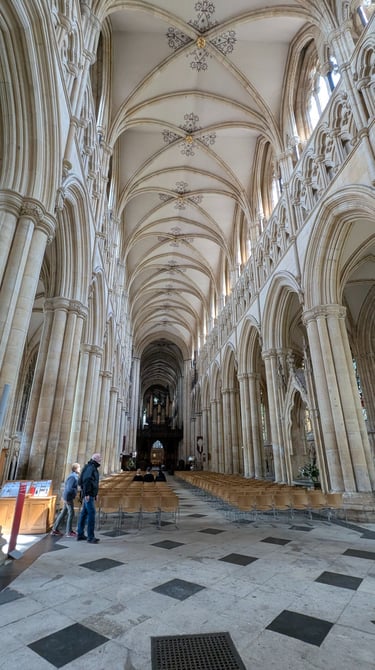
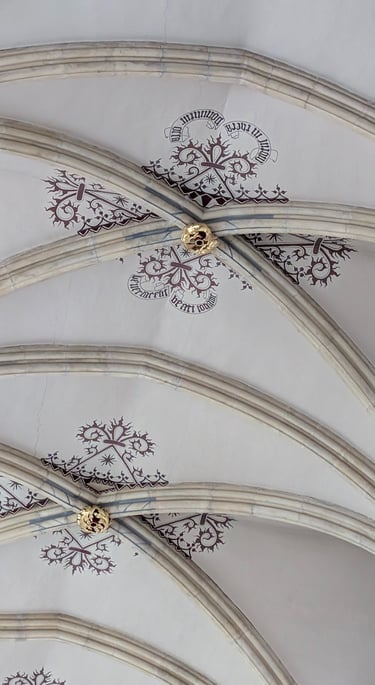
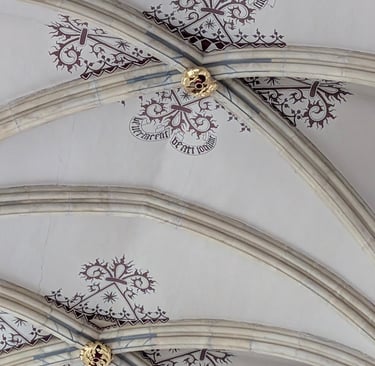
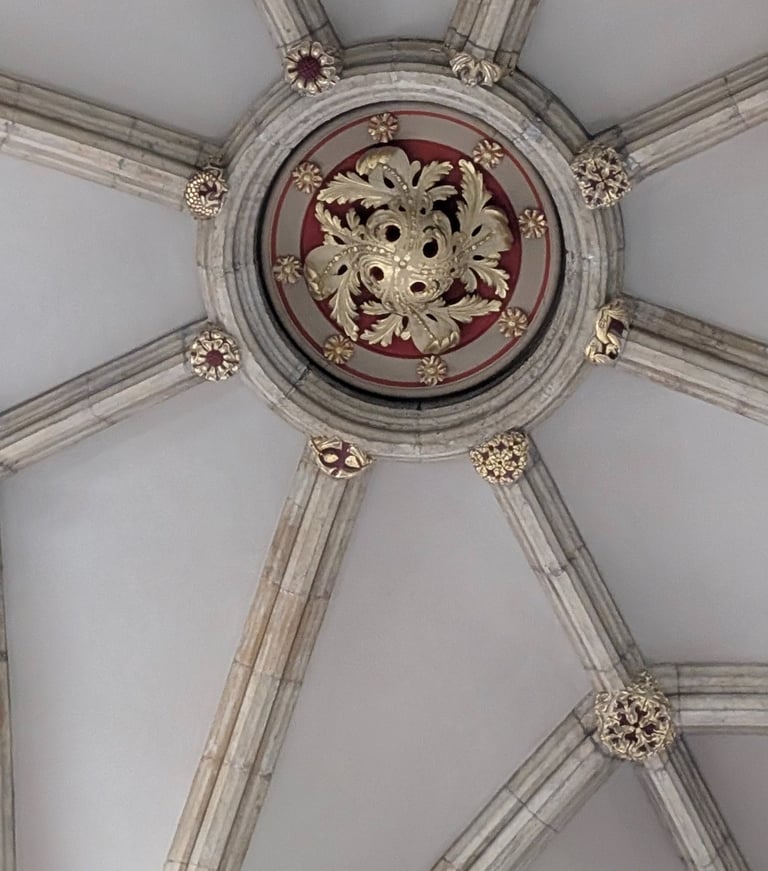
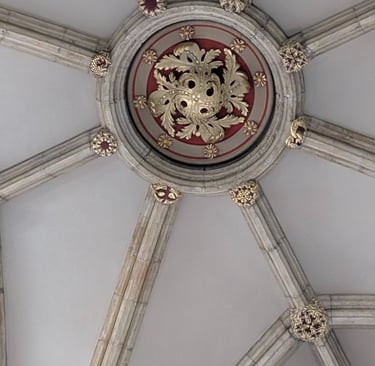
While the original Anglo-Saxon monastery is long gone, the current building was constructed between 1220 and 1420—taking a whopping 200 years to complete. Because of this slow build, walking through the Minster is like flipping through a textbook of English Gothic architecture.
2. The Building: A Gothic Masterpiece
What makes the Minster so visually spectacular is how seamlessly it transitions through three distinct medieval styles:
Early English (The East End): Built first, featuring simple, elegant lancet windows and deeply molded arches.
Decorated (The Nave): Sweeping, ornate stone carvings and elaborate window tracery.
Perpendicular (The West Front): The breathtaking twin towers you see from the outside, emphasizing grand vertical lines.
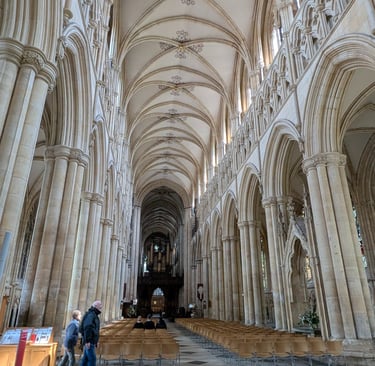
The soaring Gothic nave of the Minster. Source: Search UW-Madison Libraries - University of Wisconsin–Madison
Hidden Treasures to Look For:
The Musicians' Carvings: Tucked away in the nave aisle, you'll find a famous collection of medieval stone carvings depicting musicians playing instruments like the bagpipes, lute, and cittern.
The Percy Tomb: Located near the altar, this 14th-century monument is widely considered one of the finest examples of medieval stone carving in Europe.
The Frith Stool: A simple stone chair dating back to Anglo-Saxon times. In the Middle Ages, if a fugitive managed to reach this chair, they were granted absolute legal sanctuary.
3. The Mighty Organ
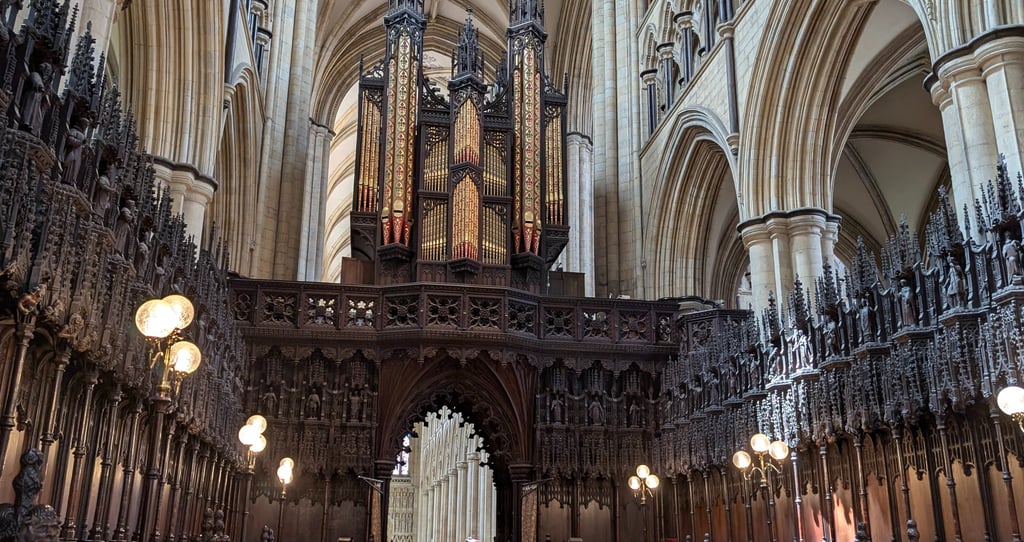
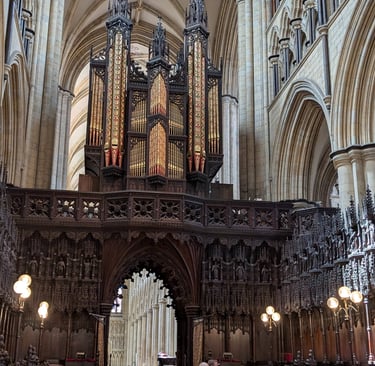
You cannot talk about Beverley Minster without talking about its monumental pipe organ, which sits proudly atop the screen dividing the nave and the choir.
Originally built in 1769 by the legendary Swiss organ builder John Snetzler, it has been expanded and rebuilt over the centuries—most notably by William Hill in 1880. Snetzler's original 18th-century pipework is still inside, giving the instrument an incredibly rich voice.
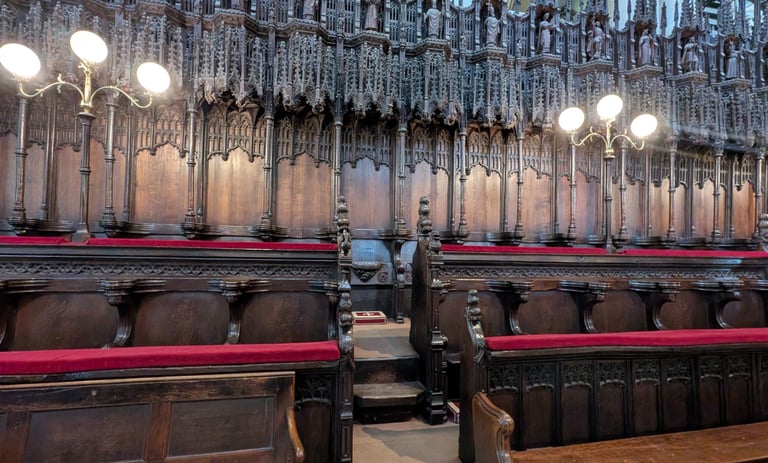
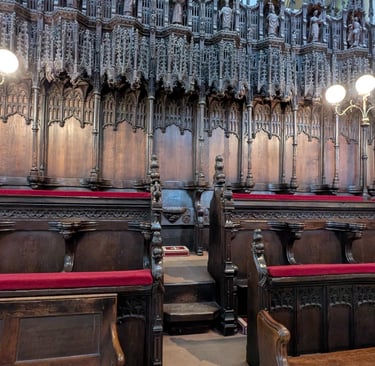
The organ is housed in an exceptionally intricate, beautifully carved wooden case designed by Sir Arthur Blomfield. If you time your visit just right, hearing the organ's bass notes reverberate off the 13th-century stone vaulting is an experience that will give you absolute goosebumps.
4. How to Visit Beverley Minster
Whether you are a casual tourist or a dedicated historian, visiting the Minster is incredibly easy and highly rewarding.
Essential Visitor Info
Opening Times: Generally open daily to visitors from 9:00 AM to 4:00 PM (Sundays usually open after morning services, around 11:30 AM).
Admission: It is completely free to enter, though donations are warmly welcomed to help maintain the historic fabric of the building.
Roof & Tower Tours: If you aren't afraid of heights, you can book a guided Roof Tour. You'll climb past the ringing chamber into the roof space to see the medieval treadwheel crane used to lift stones during construction.
These are seasonal tours and are usually arranged mid week and on Saturdays. Saftey - you wear suitable footwear and be able to climb up to 120 narrow steps.
Getting There
By Train: Beverley Train Station is a short, scenic 10-minute walk from the Minster, with regular direct links to Hull, York, and Sheffield.
Find Information about Train Times and Fares to Beverley (affiliate links coming soon).
By Car: Beverley is easily accessible via the A1079. There are several pay-and-display car parks within walking distance of the church, though the town center itself is highly pedestrian-friendly.
After your visit, make sure to wander through the cobbled streets of Beverley town center, check out the independent boutique shops, or grab a pint at the historic White Horse Inn (locally known as "Nellie's"), a famously atmospheric 17th-century pub lit entirely by gaslight.
Find places to stay in Beverley (affiliate links coming soon).
Why you should visit Beverley Minster
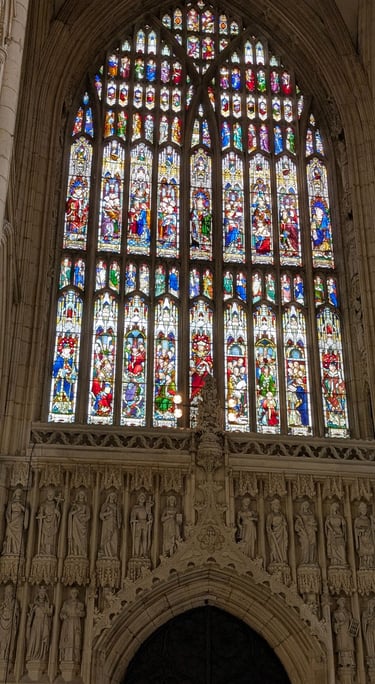
Why Beverley deserves a spot on your travel list: Beverley blends historic charm with a warm, lived‑in character. Cobbled streets, independent shops, cosy cafes, and a thriving market scene make it a place where you don’t just sightsee — you slow down. It’s the kind of town where every corner feels like a postcard. And then there’s the Minster. Standing for over 700 years, Beverley Minster is a jaw‑dropping example of medieval craftsmanship. Its soaring towers, intricate carvings, and luminous stained glass make it a place that stops you in your tracks. Whether you’re into history, architecture, photography, or simply love a moment of quiet awe, the Minster delivers.